
Deep Dive into the Bristol Downs and Avon Gorge
Group visit to Bristol Downs & Avon Gorge in June 2026.
FIELD TRIPS
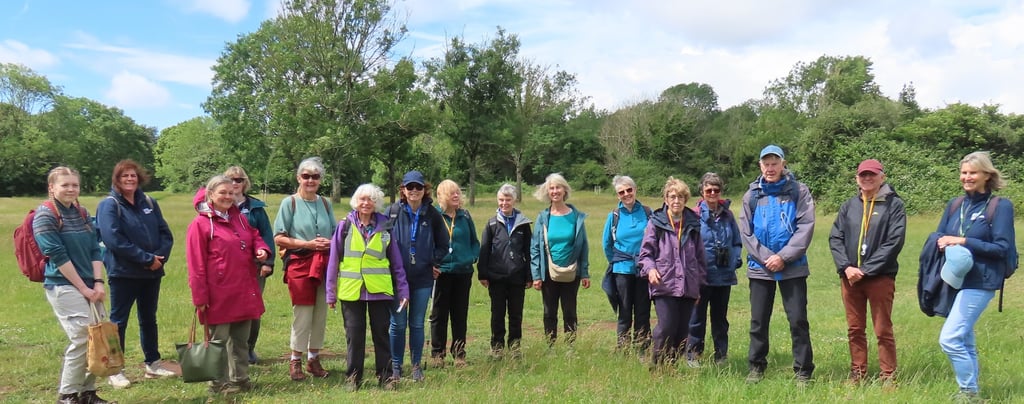
We all met up (12 of us) outside the old Bristol Zoo entrance on a dry Thursday afternoon. We were guided on a tour of the Bristol Downs by Anna Stevens, the Biodiversity Engagement Manager (Avon Gorge and Wildlife Project) and 4 volunteers.
As soon as we stepped onto the grassland we were surrounded by wild flowers, including salad burnet, yellow rattle, purple knapweed and salsify. Oxeye daisies, green-winged orchid and the descriptive jack-go-to-bed-at-noon were also in abundance; all of these are indicators of ancient grassland habitat.
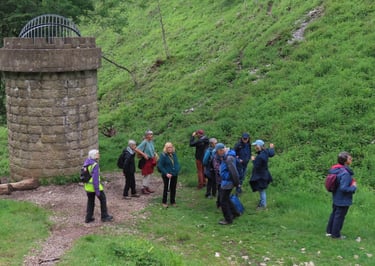
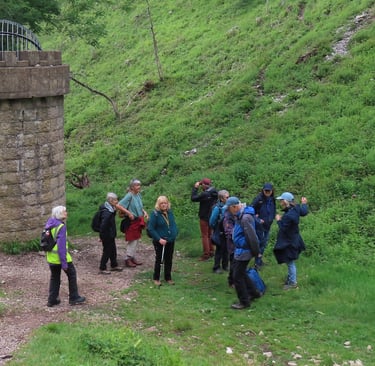
Most of the oaks on the Downs (except one!) are English oaks. We walked through flowering grasses until we stopped on one of several long stony ridges – these don’t look important now, but they are the remnants of ancient walls from the old medieval boundary system. History shows that the Downs area has been used by people for a very long time; in the past the grassland here was cropped by sheep, limestone rocks have been quarried and the alluvial soil from dredging the river Avon has been used to fill in some of the quarried dips. This has produced greener grass than the limestone rock, so different wildflowers grow here.
Anna then showed us photos of Victorian penny-farthing outings, box plane landings and donkey rides replaced by motorcycles and walkers all over the Downs as decades progressed.
The trees along Ladies Mile used to be all Elm, but due to disease there is only one left; most trees here are now lime, with their heart-shaped leaves. Common Lime, large-leaved and small-leaved limes are all around. Anna showed us how to differentiate between them, but you need good eyesight to identify the position and colour of the tiny hairs on the backs of the leaves!
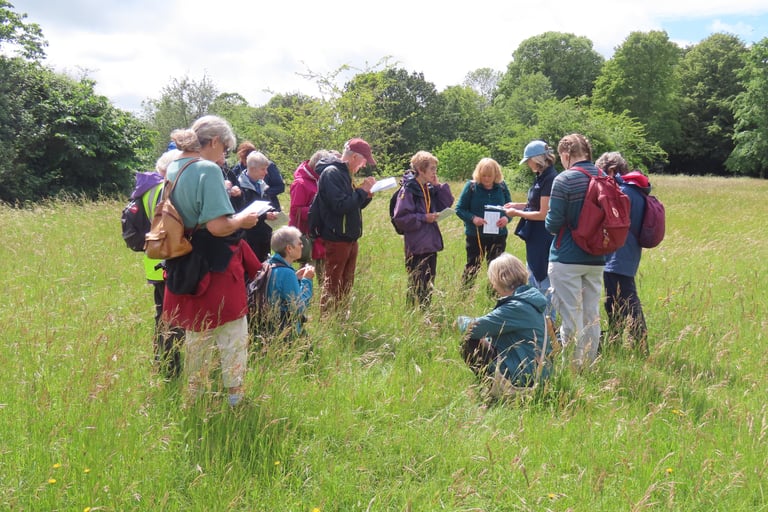
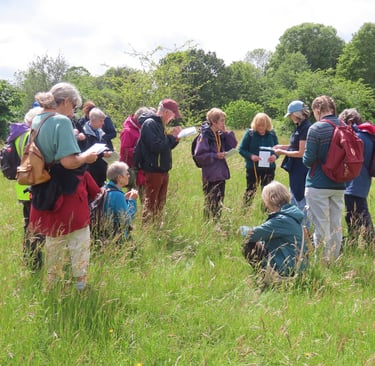
We noticed burnt patches on the Downs, Anna said that they are running a campaign to educate Downs users re the dangers of uncontrolled barbecues. Fingers crossed that it works, Anna!
She showed us how to identify grasses by their ligules, culms, auricles and sheaths. There are so many different ones, I think that it would take a lifetime to learn them all.
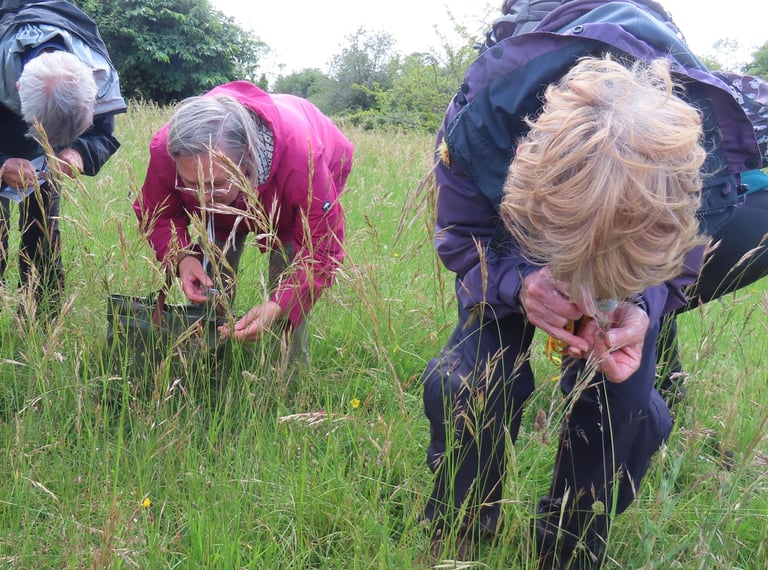
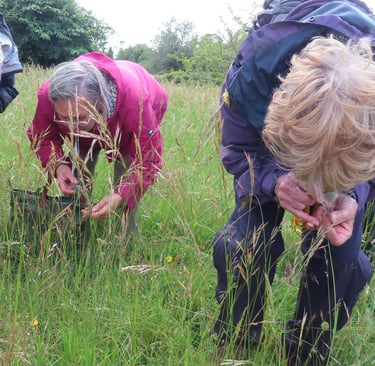
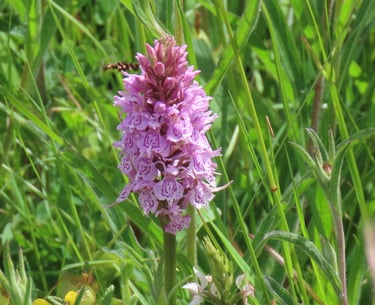
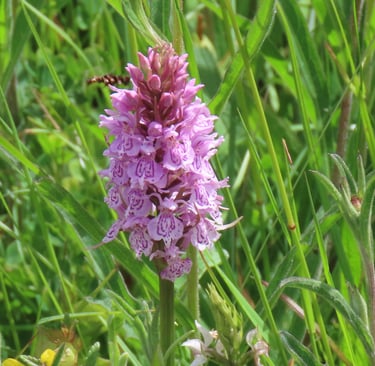
We carried on over the Downs, and found common, pyramidal and spotted orchids, bee orchids and fly orchids (seen but still uncommon). Pretty white-flowered dropwort, wood avens and pink valerian were also in abundance.
Photo: Common spotted orchid
On entering the Gully, where 7 billy goats are responsible for removing non-native plants mainly put there by the Victorians eg Holm Oak and Austrian Pine, we were in a different habitat with the rare Bristol Whitebeam, Avon, Willmott’s and Houston’s Whitebeams, Bristol Onion and Bristol Rock Cress in this Alpine habitat of steep limestone grassy ledges.
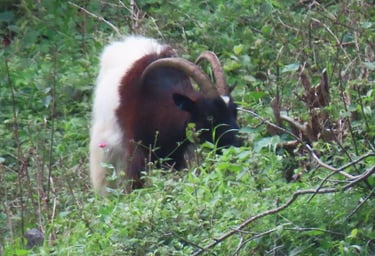
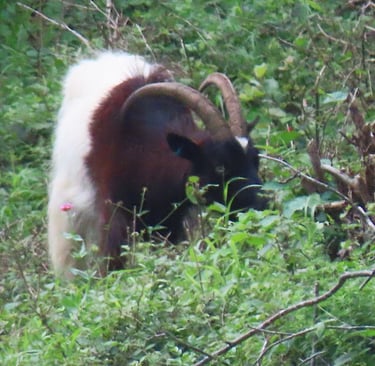
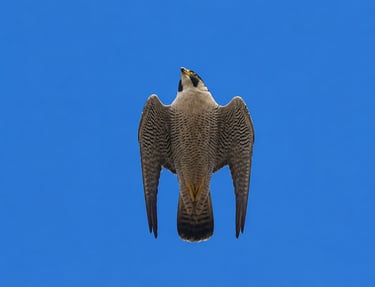
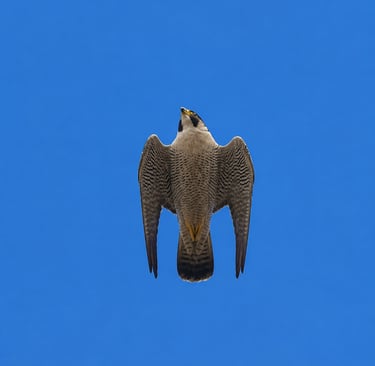
Coming back up to the top of the gully, we looked up into the blue sky and were entranced with the sight of jackdaws, cormorants, peregrine falcons, kestrels and ravens. We felt privileged to see them all, especially the peregrines. It was too early in the season to see the fledgelings (they don’t even know how many there are yet), but just seeing the adults soaring above us was magical! Thank you, Anna and team for a wonderful afternoon.
Photo: Peregrine - AI enhanced
Many thanks to Dave Sage for the photos