
Walton Common
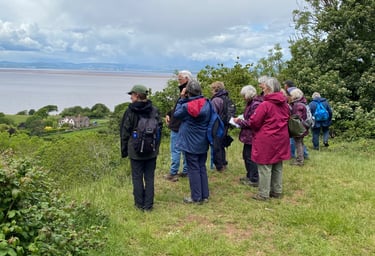
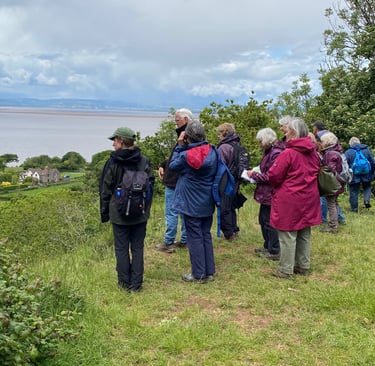
Group visit to Walton Common Avon Wildlife Trust reserve near Clevedon in May 2026.
FIELD TRIPS
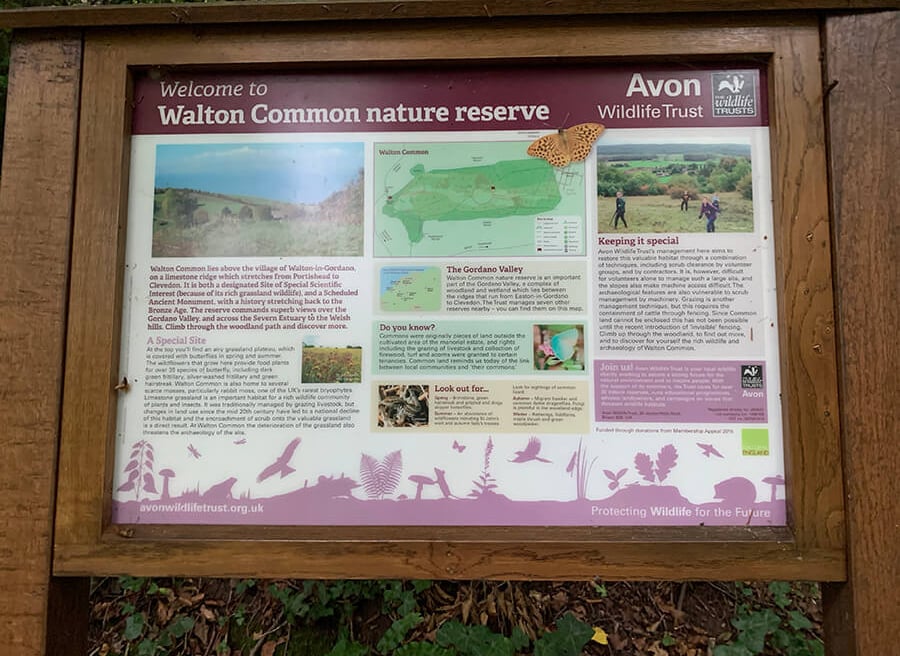
Twelve of our members went on a field trip to Walton Common AWT Reserve on Thursday 14th May. We were met by the AWT Nature Reserve Officer Frankie Clinch, and Dave, the Local Reserve warden. The reserve entrance is very well hidden, so fortunately we were were met at a nearly lay-by!
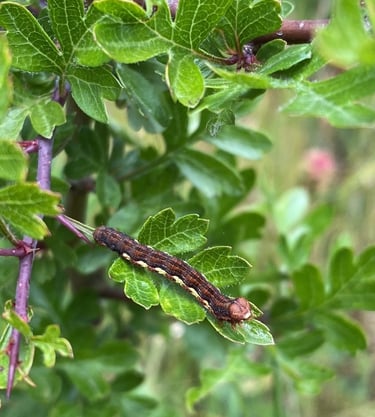
The morning was dry and cool, with the showers starting later. We were treated to the sight of some birds of prey included buzzards at the start, but missed out on the osprey and red kites which have both been seen here in the past. As it was mostly dry, we were able to spot brown argus, large white and speckled wood butterflies, and mottled umber moth caterpillars on Hawthorn (the male moths fly in the Autumn).
Photo: Mottled umber moth caterpillar
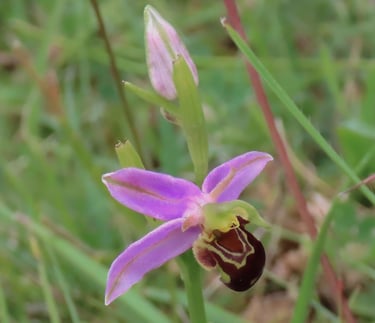
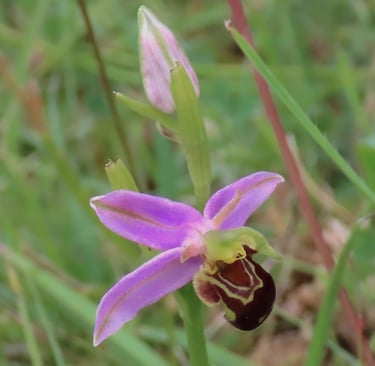
Roe deer and hares were not visible while we were there. Birds including chiff chaff and jays were evident, and funnel-web spiders and bumblebees were quite common. There were some hardy orchids and very rare rabbit moss, which is monitored as it is endangered.
Photo: Bee orchid
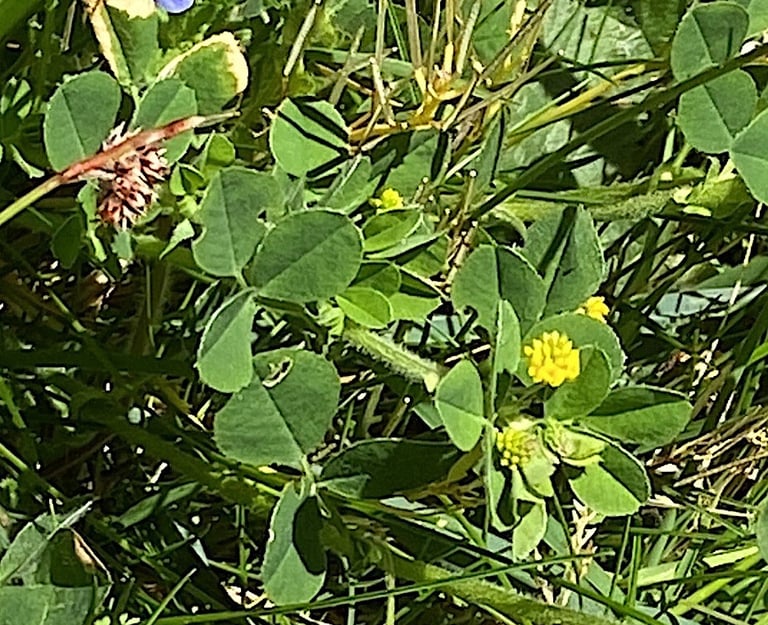
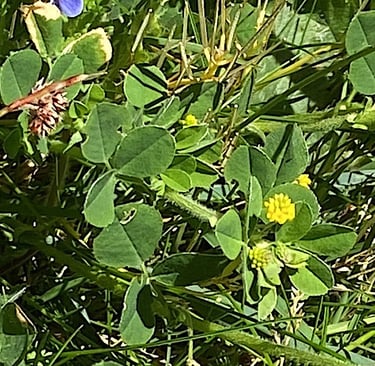
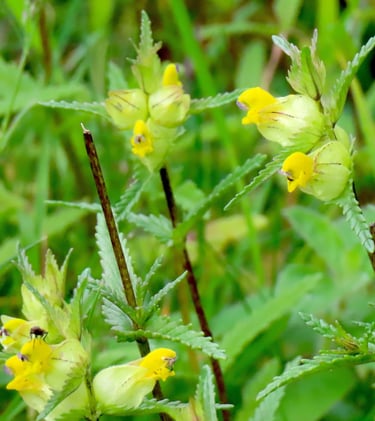
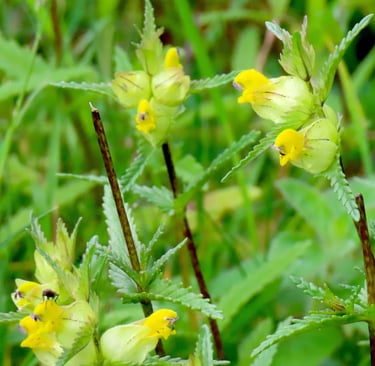
Wild flowers were abundant all over the reserve; a select list includes small cut-leaf crane’s bill, rock rose, yellow tormentil, common vetch, storksbill, speedwell, red clover, scarlet pimpernel and black medick. We also saw common broomrape (a parasitic plant which does not have its own green leaves but uses broom or gorse shrubs for sustenance) with its brown flowers, and yellow rattle, which weakens grass roots so allowing more wild flowers to prosper.
Photo: Black meddick
The reserve had been “Unwilded” in a project in the 1950’s, when it became grassland then scrubland, although at this point it was realised that the squirrels and jays were burying acorns and other seeds in the scrub, and forgetting where they were! The resulting tree saplings resulted in less territory for other wildlife breeding and feeding sites. When the AWT took over the site in 2010, scrub areas started to be cut back in rotation so different areas became suitable for assorted wildlife.
In the middle of the site there is an ancient settlement in the shape of a “banjo”, also a WW2 bombsite crater (either from a miss-aimed German bomb or one of our own pilots jettisoning unused ordnance before landing back at base). At the far edge of the reserve is a disused quarry and kiln, with a wonderful view of the Severn – at this point the intermittent rain came to an end, so we were able to eat our lunch in the dry!
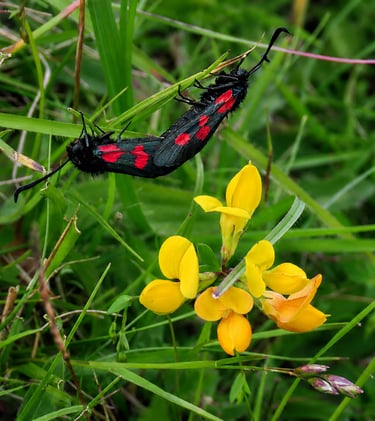
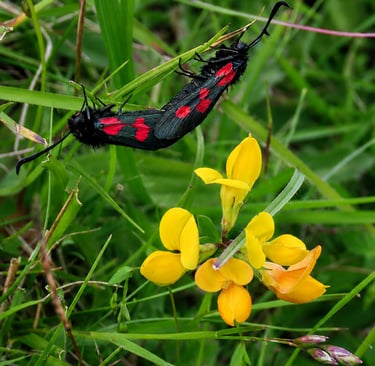
Mating burnet moths on bird's foot trefoil
Yellow rattle flowers
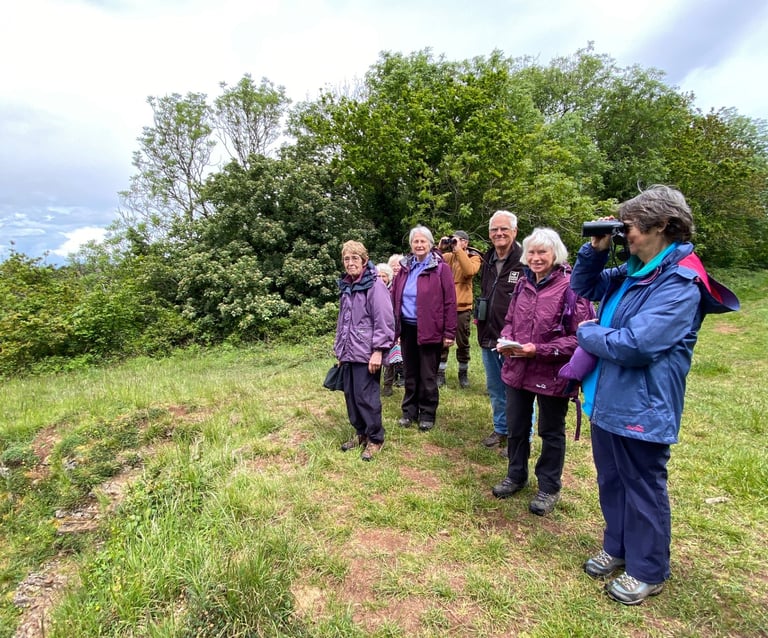
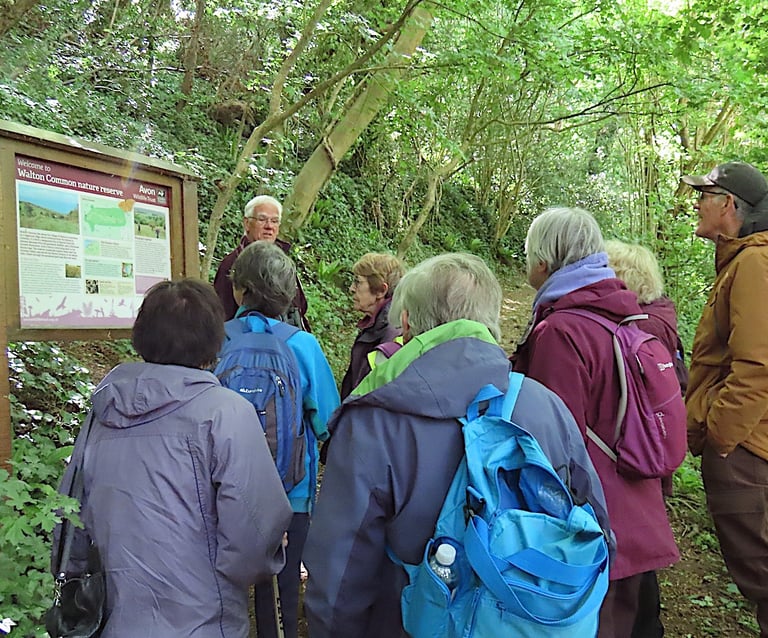
Many thanks to Dave Sage for the photos
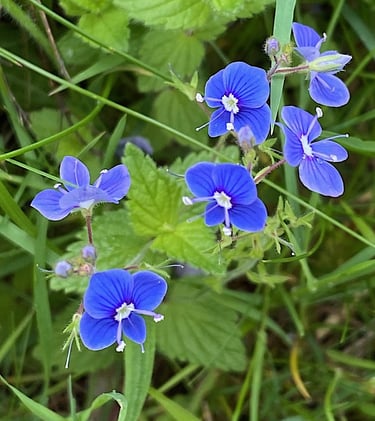
Germander speedwell